
Many students have played mobile games ever since their hands grew large enough to hold a phone or tablet, using them to occupy their time and avoid boredom.
When people think of video games, many picture Mario Kart on a console or Minecraft on a PC, but an often overlooked form of gaming exists right in people’s hands. Tablets, phones, and other hand-held devices have provided entertainment from an early age that has grown alongside students. From matching games to role-playing games (RPGs) to puzzles, some students spend their spare time progressing through these applications.
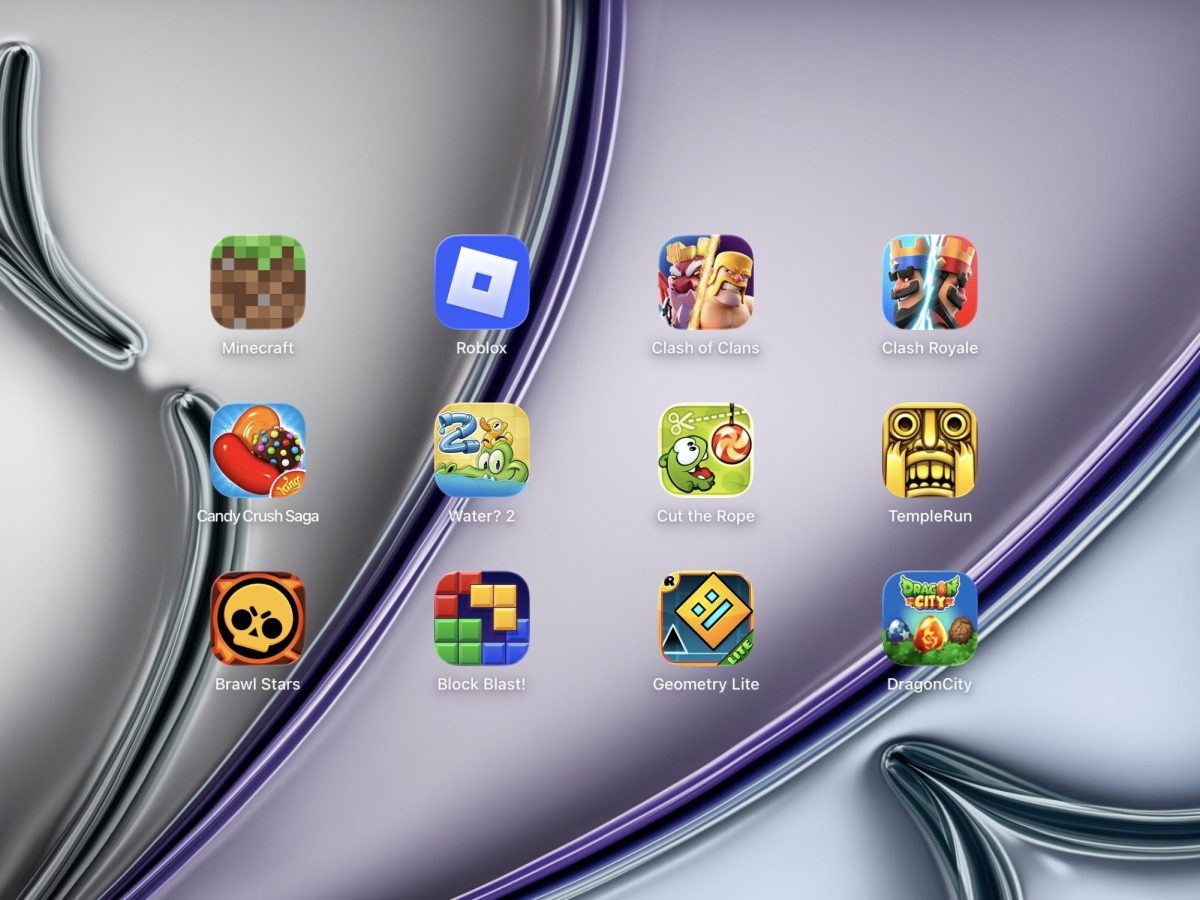
Over the years, certain mobile games have risen to popularity almost overnight, becoming trends among students before eventually being replaced in a continuous cycle. An early and recognizable example of this is Candy Crush. With its vibrant colors and matching objectives, it challenges players to clear levels by aligning candies. Whether waiting for the bus or a ride home, it provided an easy solution to boredom. Games like Where’s My Water?, Cut the Rope, and Temple Run also bring a sense of nostalgia to many.
“I wanted to play Cut the Rope so badly as a kid, but I could only download the free versions. I played the medieval one a little bit for free. If you watched an ad, you could unlock some of the levels,” said senior Wyatt B.
As these simpler games faded in popularity, newer titles began to reflect more varied and complex player interests. Today, mobile gaming spans a wider range of genres and play styles. Modern games range from strategy-based titles to quick, casual experiences..
“I used to play a lot of Brawl Stars. Now I play Clash of Clans and Block Blast,” said senior Joshua T.
As mobile games became more competitive, titles like Dragon City introduced leaderboards, long-term progression, and in-game purchases that changed how players experienced success. Early players often had an advantage, but maintaining that position became increasingly difficult as monetization grew.
“At one point I was third on the leaderboard because of how early it was, but then I dropped it for a few months and everyone had paid their money for their boost boxes,” said Wyatt B.
Mobile gaming has evolved from skill-based progression to systems where consistency, and often spending, play a major role in staying competitive.
One game that bridges both the past and present is Geometry Dash, a rhythm-based platform that has remained popular over time.
“I like that it’s a rhythm game, and I think that’s why I started playing it in the first place. When you have to tap the screen and make moves, it’s synchronized with the rhythm of the music that’s playing,” said music teacher Andrew Scheiner.
Ultimately, mobile gaming reflects both technological advancement and changing adolescent behavior. What began with simple games like Jetpack Joyride and Cut the Rope has expanded into a diverse landscape including strategy games like Clash of Clans, simulation games like Dragon City, and rhythm-based challenges like Geometry Dash. As mobile games continue to evolve, they remain a constant presence in students’ lives, adapting to how and why they are played.