
A new law went into effect for all schools in New York State, stating that a classroom can only reach a maximum temperature of 88 degrees Fahrenheit, beginning September 2025.
Many schools across the state face the problem of very high temperatures in classrooms, particularly at the start of the school year in September, and near the end of the year in June. This poses a problem for many, as final examinations are occurring around this time. Testing locations and classrooms can be poorly ventilated and heat up quickly, leading to students being uncomfortable and unable to concentrate on the task at hand. In June 2025, temperatures even hit 97 degrees Fahrenheit during exam week in Commack, according to WorldWeatherInfo.com.
“For the [Global History Enriched] final, there was no air conditioning in the room and there was a heat wave outside. It was 95 degrees and it was really hot,” said sophomore Melina A.
The new law helps address this problem by mandating schools take measures to help cool down spaces once they hit 82 degrees Fahrenheit, through means such as turning off lights, air conditioning, using fans, or opening windows. These methods all help create a cooler environment for students, which could increase focus and allow students to perform better in their academics.
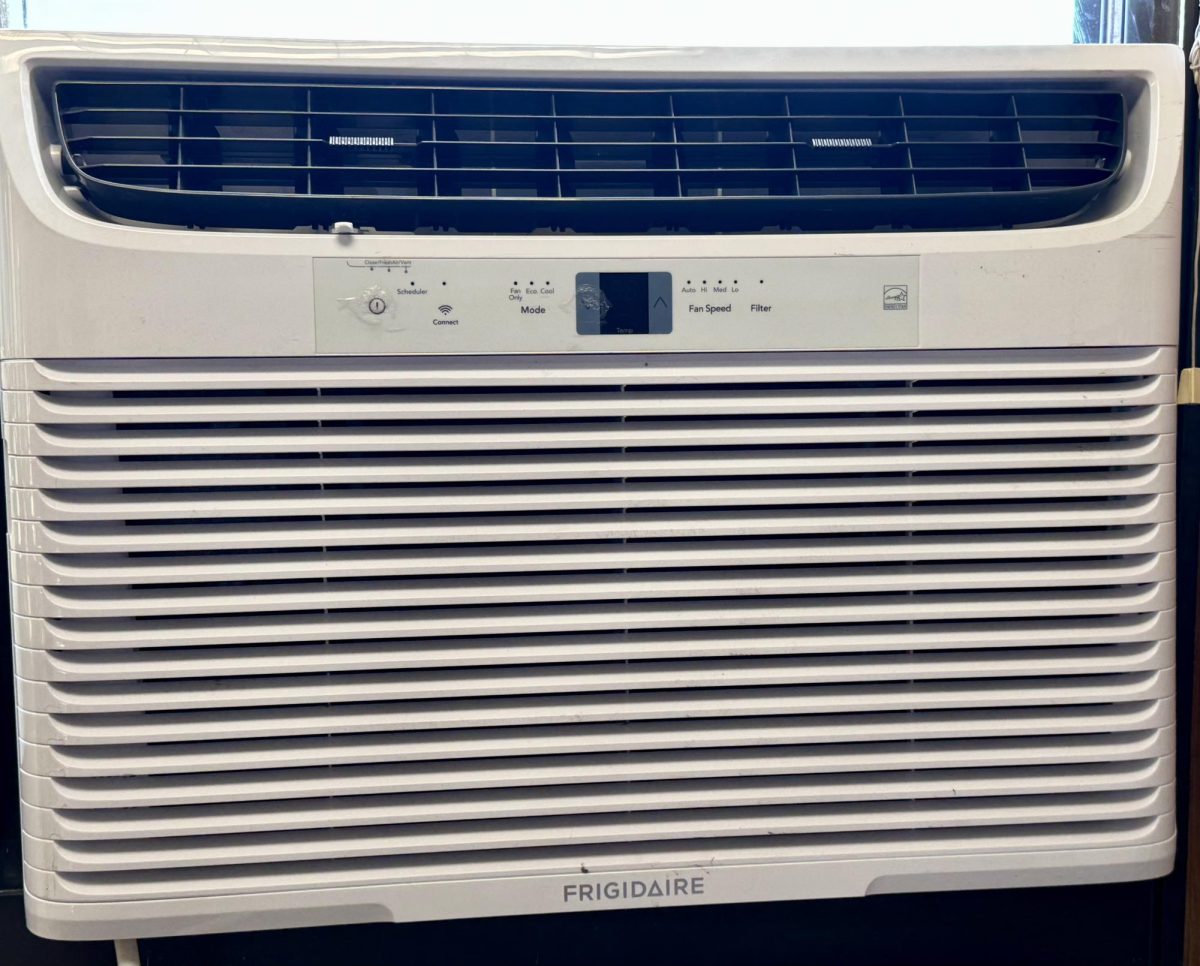
Some of these initiatives were already implemented prior to the passing of the law, and can be seen through the new air conditioning of large spaces such as the cafeteria and the auditorium. Some classrooms are air conditioned due to medical accommodations, but there are still some that aren’t.
“[…] We do things called mitigation factors, things that we can do to try to maintain a lower temperature, things like fans in the room, cross ventilation, things along those lines, and then at certain temperature thresholds, we actually have to take action to either air condition the space or clear the space and relocate,” said assistant principal Eric Biagi.
Despite efforts to improve how to cool down classrooms, it doesn’t always help with cooling down quickly. Densely filled classrooms, a lack of wind outside, and even the over-use of air conditioners makes the classroom become too cold for students, either adding to, or not helping resolve the initial issue.
“If a classroom has an AC, it is helpful if the AC’s are set to come on before the school day starts, because when the first period classes are walking in, it’s very warm in [my classroom],” said math teacher Kristin Walkowiak. ◼️